I was a master of it.
Intellectual bypass. Spiritual bypass. Positive bypass. I could circle a feeling for years without ever landing in it — and the whole time, I genuinely believed I was doing the work.
That's what makes spiritual bypassing so tricky. It doesn't feel like avoidance. It feels like growth. It feels like healing. It can look, from the outside and from the inside, almost identical to the real thing.
Almost.

Some images from a past Facebook post: how I saw myself then vs. how I see that version of myself now.
What Spiritual Bypassing Actually Is
The term was coined by psychologist John Welwood in the 1980s to describe something he was seeing in his therapy clients who were also dedicated spiritual practitioners: a tendency to use spiritual ideas and practices to sidestep unresolved emotional wounds, psychological development, and the ordinary human work of feeling.
In plain language: using spirituality to avoid rather than to grow.
It sounds like:
"Everything happens for a reason." (Said before the grief has been felt.)
"I've forgiven them." (Said before the anger has moved through.)
"I'm not attached to outcomes." (Said by someone who is terrified of loss.)
"I just need to raise my vibration." (Said instead of looking at what's actually happening.)
None of these statements are inherently wrong. The problem is the timing. Spiritual truth used prematurely — before the feeling has been fully felt — doesn't liberate us. It buries us more deeply under a layer of spiritual veneer.
What It Looks Like In Practice
Spiritual bypassing is one of the most common patterns I encounter in people who have done a significant amount of inner work. And the more sophisticated the practice, the more sophisticated the bypass.
It can look like:
Transcendence over descent. Always reaching upward — toward the light, the universal, the higher self — while avoiding the specific, messy, embodied truth of your own life. I lived here for years. I wanted to transcend my grief rather than feel it. I wanted to rise above my wounds rather than descend into them.
Premature forgiveness. Forgiving before you've allowed yourself to be angry. Real forgiveness — the kind that actually frees you — arrives after the grief and anger have moved through, not before. Forgiveness offered before that point is often just another way to avoid the feeling.
Meaning-making before feeling. Reaching immediately for the lesson, the gift, the silver lining — before you've allowed the loss or the pain to actually land. Understanding is important, but not as a substitute for feeling.
Positivity as armor. The belief that staying positive is spiritual, and that feeling anger, grief, fear, or despair is somehow a failure of consciousness. This one is particularly insidious because it sounds so reasonable.
Insight without embodiment. Reading all the books, understanding your patterns beautifully, being able to articulate your wounds with great sophistication — while nothing actually changes in your lived experience. This is the gap between the map and the territory. And it's exactly where most people get stuck.
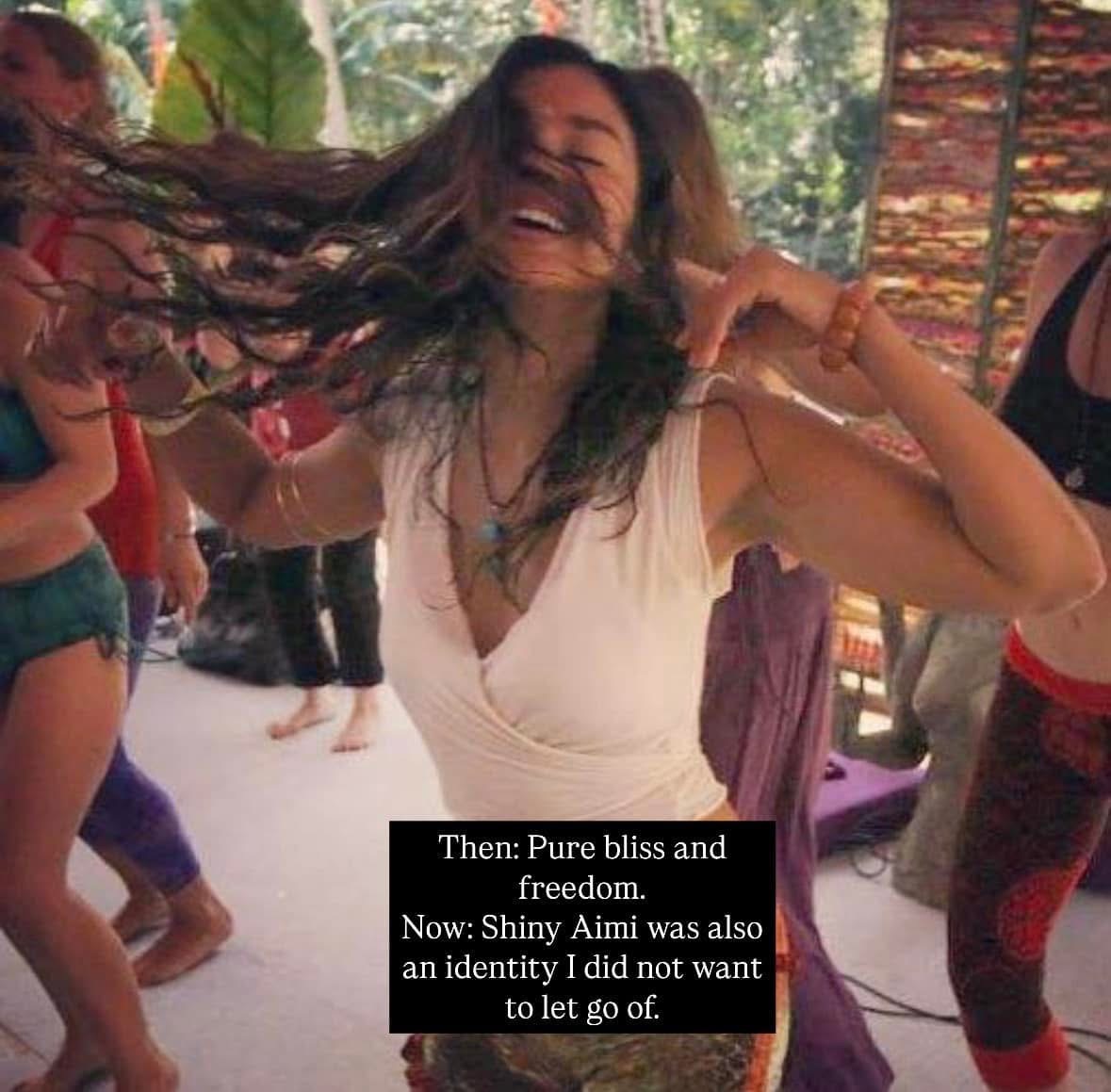
With self-compassion - how I saw it then vs. how I see it now.
The Plant Medicine Version
I want to name this specifically because it's important, and because I've lived it.
Plant medicine ceremonies can be extraordinarily powerful catalysts for insight, healing, and transformation. I have enormous respect and gratitude for these teachers. And — they can also become a sophisticated form of spiritual bypassing.
When we return to ceremony again and again seeking the opening, the vision, the breakthrough — without doing the integration work between — we can end up with profound experiences that don't translate into lasting change. The ceremony opens a door. Integration is what determines whether we actually walk through it.
A wise teacher once said to me: "Growing is really not a collection of peak experiences. There are no shortcuts to growing consciousness."
That landed hard. And it was true.
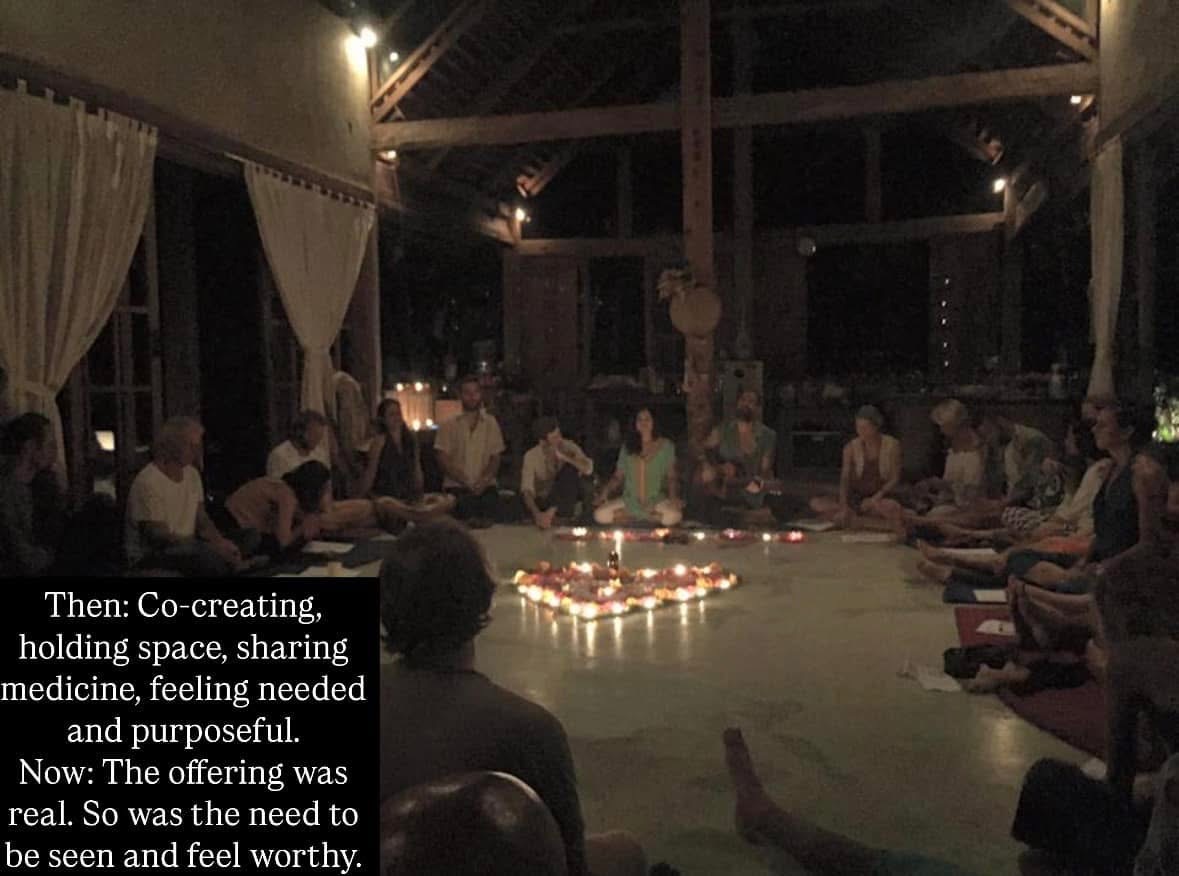
With self-compassion - how I saw it then vs. how I see it now.
The AI Version
I'll add one more modern form worth naming, because I write about this a lot: AI as spiritual bypass.
When we use AI for inner work — which can be genuinely powerful — it can just as easily become the most sophisticated bypass available. Opening a chat when we should just be sitting with a feeling. Gathering insight after insight, building an elaborate understanding of our patterns, calling it healing.
The feeling still hasn't been felt. The pattern still hasn't been lived differently. But we've generated a very impressive amount of analysis about it.
AI cannot feel for us. And reaching for it when an emotion arises is the psychic equivalent of leaving the room.
How to Know If You're Doing It
The most honest question to ask yourself is this: is my spiritual practice helping me feel more, or less?
Genuine inner work — whatever form it takes — should make you more present to your actual experience, not less. More able to feel the full range of human emotion, not more defended against it. More human, not less.
Signs you might be bypassing:
You have profound insights regularly but your patterns don't change
You feel more comfortable talking about your wounds than feeling them
You reach for spiritual frameworks the moment something painful arises
You find it easier to forgive than to be angry
You've been told you're "in your head" — by a therapist, a partner, your own body
Your spiritual practice makes you feel superior to people who "haven't done the work"
That last one is worth sitting with. Spiritual bypassing often carries a subtle inflation — a sense that we're ahead of the curve, more conscious than others, further along the path. Jung called this inflation, and it's one of the shadow sides of any serious spiritual practice.
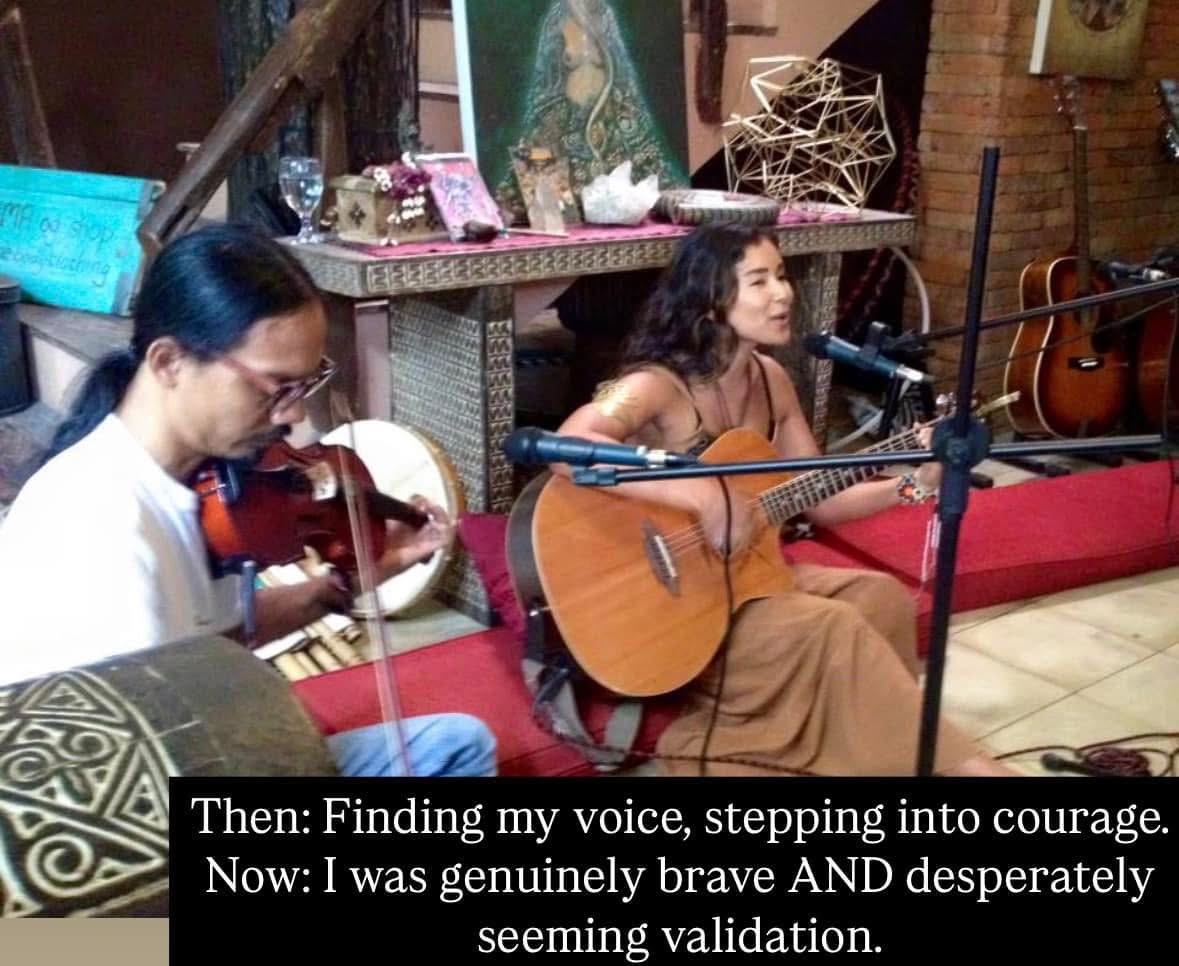
What the Alternative Looks Like
The alternative to spiritual bypassing isn't abandoning spiritual practice. It's bringing it into contact with real feeling rather than using it to rise above feeling.
James Hillman, the depth psychologist who changed my life, wrote that real maturity isn't about rising above your life — it's about sinking more fully into it. Trees grow both ways. Height without depth is the first thing to fall.
The descent is where the real work happens. Not the ascent.
This means:
Letting grief be as large as it actually is, before reaching for the meaning in it.
Letting anger move through before offering forgiveness.
Staying with the not-knowing before reaching for the explanation.
Feeling the feeling in the body — the tightness, the hollowness, the held breath — before analyzing what it means.
We cannot think our way out of what we felt our way into. The only way through feeling is to feel.
That's not a spiritual idea. It's just the truth.

Me, ten years later: older, wiser and a little more whole.
If you recognize yourself in any of this — and you're ready to do the work that actually reaches the part that hasn't been reached yet — book a free 30-minute Threshold Call. Let's find out together whether Jungian coaching is the right next step.
Aimi Colibrí is a certified Jungian coach based in Grass Valley, CA (Nisenan Territory), working with clients online across the US and worldwide. She writes about depth psychology, shadow work, and the messy middle of transformation.